How to Make a Cozy Farming Game
A cozy farming game is a gentle machine: plant, wait, harvest, improve. Here is how to tune crop timers, seasons and the daily loop so it soothes instead of stresses.
Key takeaways
- Decide early whether crops grow in in-game days or real time. It changes the whole game: a session game or a check-in game.
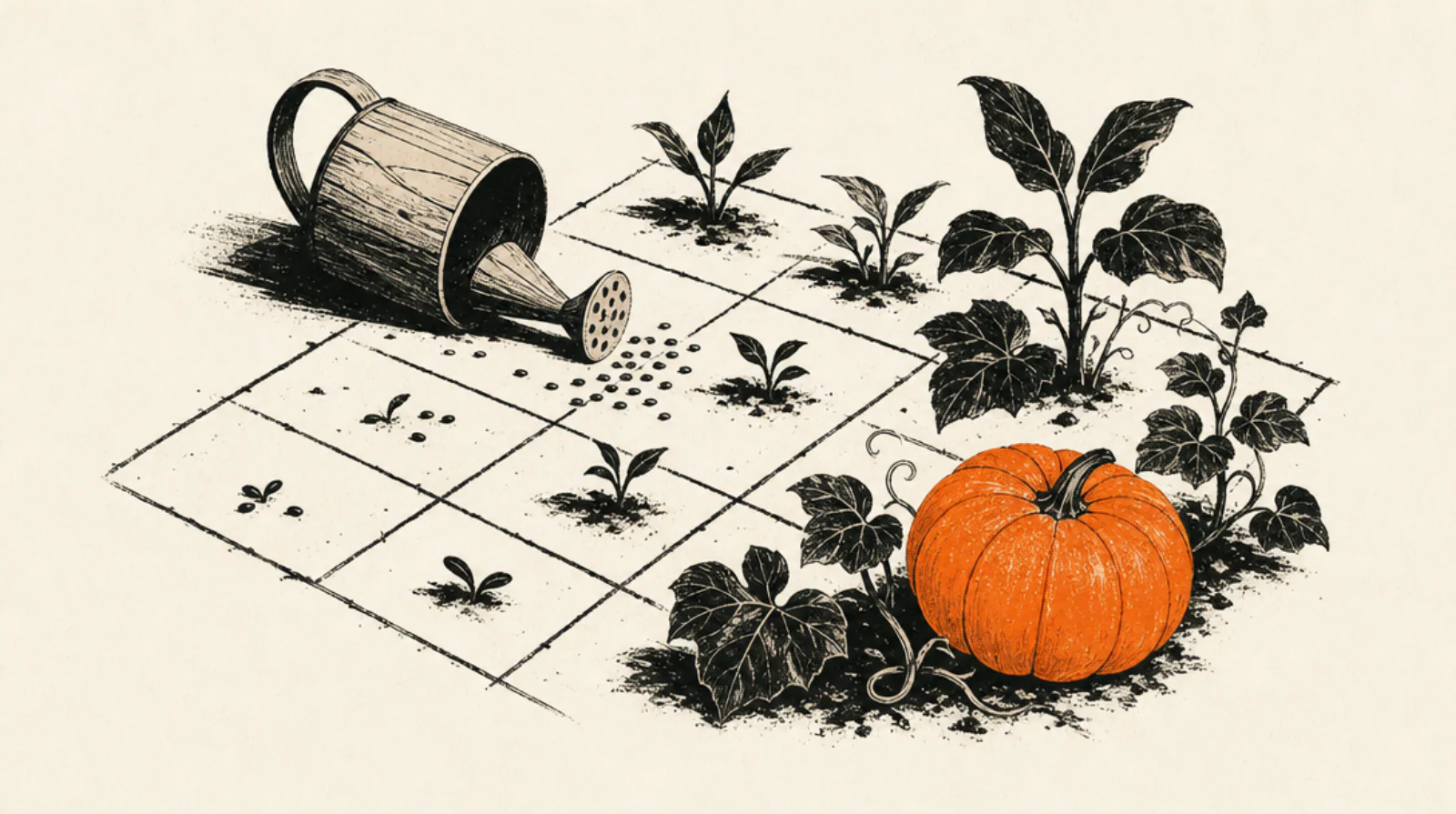
- Model the farm as a tile grid where each tile holds soil state, crop type, growth stage and watered flag.
- Seasons give the calendar a shape: which crops grow when, and what is lost when the season turns.
- Cozy means no harsh fail states. Give pressure through choices, not punishments.
To make a cozy farming game, build a tile-based farm where seeds grow through stages over a set number of days, give the player a daily routine (water, harvest, sell, buy, improve), wrap it in a calendar of seasons that decides what can grow, and keep fail states soft. The games in this genre feel relaxing because the loop is predictable and every day leaves the farm a little better. Your job is tuning the timers and prices so planning is satisfying and nothing feels like a chore.
First decision: game days or real time
Farming games come in two shapes, and they play completely differently.
- In-game days (the Stardew Valley and Harvest Moon tradition). A day lasts a set number of real minutes, often 10 to 20. Crops grow overnight when the player sleeps. Players play long sessions and plan by the day.
- Real time (the mobile farm tradition). A carrot takes 15 real minutes, a pumpkin takes 8 hours. Players check in several times a day. Growth continues while the game is closed, so the game needs offline progress: on return, compare the stored planting time to the current time and advance every crop.
A browser game played from a link suits either. In-game days give a richer single session; real time gives a reason to come back tomorrow. Do not mix them in a first game.
The farm as data
The farm is a grid, say 12 by 10 tiles to start, growing as the player clears land. Each tile stores a small record:
- Soil: untilled, tilled, or blocked by a rock, stump or weeds.
- Crop: empty or a crop type.
- Growth: days grown so far (or planting timestamp in a real-time game).
- Watered today: yes or no, reset each morning.
- Quality or fertilizer if you add them later.
Each crop type is a definition: seed price, sell price, days to grow, number of visual stages, seasons it grows in, and whether it regrows after harvest. Keeping crops as a table means adding a new crop is one row, and balancing is a spreadsheet exercise instead of a code change. If you already keep the crop table in a sheet, turning a spreadsheet into an app shows how to hand it to the agent.
Crop timers and the profit table
The core economic question in a farming game is profit per day of growing. Lay out a table before building, with in-game days as the unit:
- Turnip: seed 20, sells 35, grows in 4 days. Profit 15, or about 3.75 a day. The safe starter.
- Strawberry: seed 100, sells 60, grows in 8 days, then regrows every 4 days. Loses money on the first harvest, earns well after the second. Rewards planting early in the season.
- Melon: seed 80, sells 250, grows in 12 days. Big profit, but locks a tile for most of a season. A risky bet if the season is short.
- Flowers: cheap, slow profit, but loved by a villager or needed for a quest. Value that is not money.
The table creates choices: fast crops for cash flow, regrowing crops for planners, expensive crops for gamblers. If one crop is best in every column, players will plant only that, and the game gets boring. Make growth stages visibly distinct (seed, sprout, leafy, flowering, ripe) so players can read the farm at a glance.
Seasons give the calendar a shape
A common structure is four seasons of 28 days. Seasons do three jobs: they limit which crops grow, they change the look of the world, and they create a natural deadline. When the season turns, crops that do not belong to the new season wither. That is a gentle pressure: plant the melon on day 20 of summer and it will not make it.
- Give each season three to five crops and one standout (the high-value one players plan around).
- Add a seasonal event, like a harvest festival or a flower dance, to mark the middle or end.
- Change palettes and music by season. Seasonal change is much of what makes the year feel like a year.
- Winter can be a rest season with no outdoor crops, for fishing, foraging and upgrades.
Design the loop to relax, not nag
A day in a cozy farming game has a shape: wake, check the farm, water, harvest what is ripe, ship it, go to town, buy seeds or an upgrade, do one other thing (fishing, a chat with a villager, clearing a stump), sleep. Making that loop relaxing is about removing friction and harshness:
- 01Soft energy. An energy bar that limits how much you do per day is common, but running out should end the day gently, not punish.
- 02No death of the farm. Unwatered crops can pause growth for a day rather than die. Weeds can slow the farm, not wipe it.
- 03Upgrades that remove chores. A bigger watering can, then a sprinkler that waters nearby tiles. Automating tedious tasks is one of the most satisfying progressions in the genre.
- 04Batch actions. Holding the button to water a row or harvesting with one tap per tile, not a menu per tile.
- 05A satisfying ship moment. A box where you drop the day's harvest, and a summary of earnings in the morning.
A cozy farming brief to paste
A cozy 2D top-down farming game in soft pastel pixel art. In-game days of 12 real minutes; crops grow overnight. The farm starts as a 12 x 10 grid with rocks and weeds to clear. Each tile stores soil state, crop, days grown and watered today. Crops are rows in one data table: seed price, sell price, days to grow, growth stages, seasons, regrows. Spring crops: turnip (4 days), potato (6), strawberry (8, regrows every 4), tulip. Four seasons of 28 days; crops wither at season change. Daily loop: water, harvest, drop crops in the shipping box, morning summary of earnings. Soft energy bar that ends the day gently. Unwatered crops pause instead of dying. Shop in town for seeds and a watering can upgrade, later a sprinkler that waters 8 tiles. Seasonal palette and music. Gentle sounds for harvest and watering. Save to the browser each morning.
After the first build, play a full in-game week before giving notes, because farming problems are economic and only show up over several days: "I have too much money by day 5", "watering 40 tiles takes too long". Use Plan mode before adding a big system like villagers with friendship levels, and the UI Editor to rearrange the HUD, the shop and the inventory bar by hand.
What to add after crops work
- Animals: a coop with chickens that need daily feeding and give eggs. A second, slower loop.
- Villagers: a few characters with gift preferences and friendship hearts that open small scenes.
- Crafting: turn crops into products (jam, pickles) that sell for more but take time.
- Decoration: paths, fences and furniture with no economic value. Many cozy players spend more time here than anywhere else.
Add one at a time, and only after the crop loop is good on its own. If you want a game that is less about crops and more about a creature to care for, see how to make a virtual pet game, which uses similar timer ideas. Ready to share? Publish to a link and send it to the Arcade, and browse the games use case for more ideas. Seasons and a growing farm also need solid save data.
Frequently asked questions
What makes a farming game feel cozy?
A predictable daily routine, soft consequences, small satisfying feedback, seasonal change and steady improvement of the farm. Pressure comes from choices about what to plant, not from punishment.
How long should a day be in a farming game?
Ten to twenty real minutes is common for games with in-game days. Shorter days feel rushed; longer days make the loop drag.
Should crops grow in real time?
Only if you want a check-in game played several times a day. Then you need offline progress so crops keep growing while the game is closed. Session games use in-game days instead.
How do I balance crop prices?
Compute profit per day of growing for each crop, and make sure no crop wins on every measure. Fast crops, regrowing crops and high-value slow crops should each suit a different strategy.

