Daily Rewards and Streaks Without the Dark Patterns
A daily reward should feel like a gift for coming back, not a fine for staying away. Here is how to build one that respects players and still works.
Key takeaways
- Reward returning, never punish absence: a calendar that pauses when a day is missed beats one that resets to day 1.
- Keep the daily gift small (around a tenth of what a normal session earns) so the game itself stays the reason to play.
- Refuse paid streak repair, countdown pressure, guilt notifications and anything aimed at making a missed day hurt.
Daily rewards and streaks bring players back by giving them something each new day they open the game, and by counting consecutive days played. Done kindly, they are a small welcome: one tap, a modest gift, a count that pauses rather than resets when life gets in the way. Done badly, they are a dark pattern that turns a game into a chore and a missed day into a loss. This guide covers the values, the data and the bugs, and is explicit about the designs you should refuse.
First, the patterns to refuse
Dark patterns are designs that work against the player to raise a number for the developer. Daily systems are where they cluster, because loss aversion is a powerful lever. Do not build any of these:
- Reset to zero. Missing one day wipes a 40-day streak and its escalating rewards. It is designed to make absence painful, and it makes people quit the day it happens.
- Paid streak repair. Charging money (or premium currency bought with money) to restore a streak sells relief from anxiety the game created.
- Countdown pressure. Big timers saying "23:14:07 left to claim or lose it", or rewards that expire within hours.
- Guilt notifications. "Your pet misses you", "Your streak is about to die". If you send reminders at all, they must be opt-in, neutral and easy to turn off.
- Withheld gameplay. Core content only reachable through a long login chain, so a player who plays a lot in one week loses to one who opens the game for five seconds each day.
- Hidden escalation. Rewards that grow huge on day 30 to keep people trapped, while day 1 rewards are trivial.
None of these is needed for a daily system to work. A warm version keeps players who like the game, and those are the ones you want. Our virtual pet guide makes the same argument for gifts over guilt in the genre that depends on daily return most.
Two shapes: a calendar and a streak
Most daily systems are one of two shapes, or both:
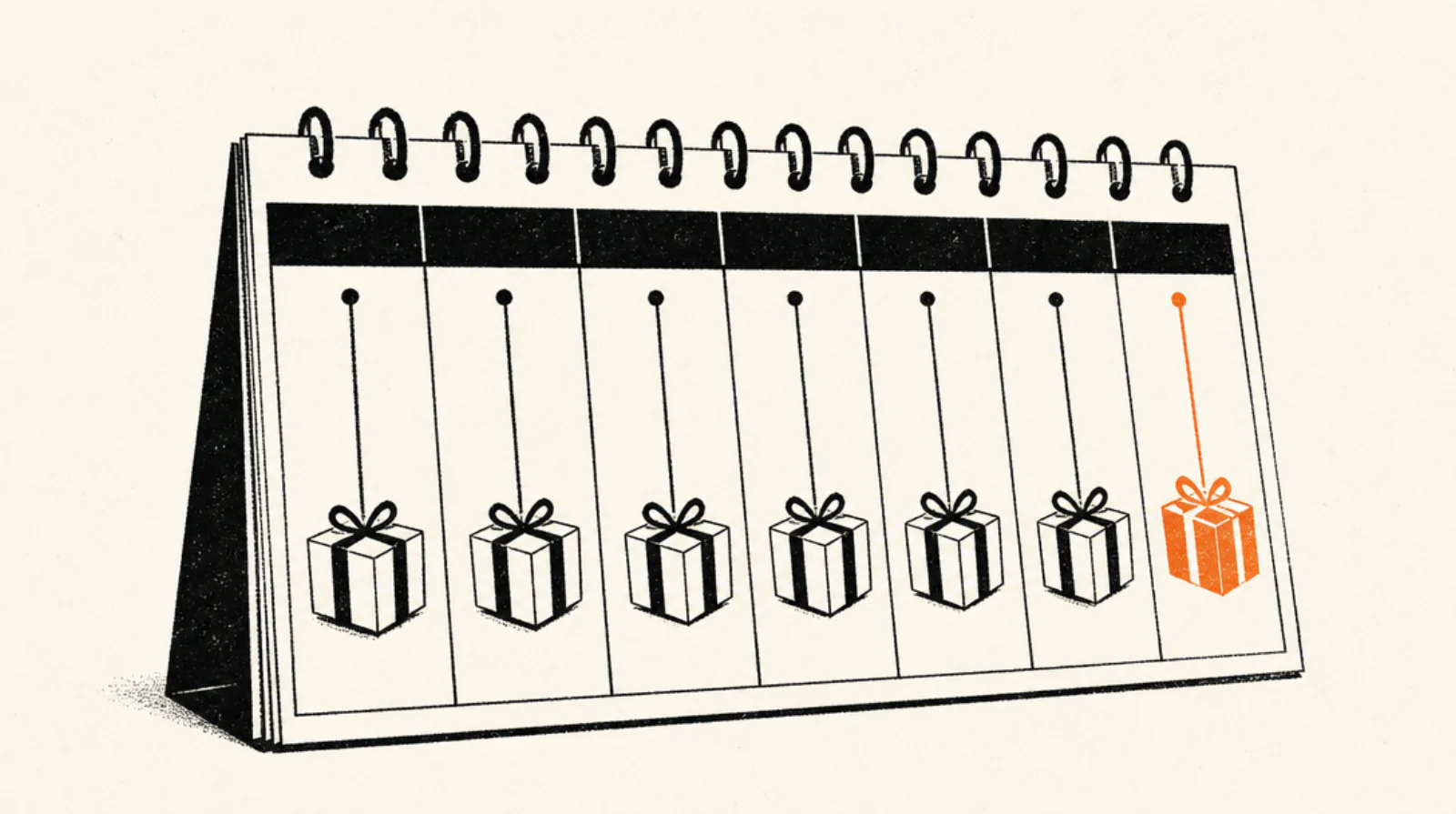
- A login calendar: day 1 to day 7 rewards in a row. Each new day you play, you move one step and claim that step. The kind version pauses on missed days: if you played Monday and come back Thursday, you claim day 2, not day 1. After day 7 it loops.
- A streak: a number of consecutive days played. It is a record, not a currency. It can give small bonuses at milestones (7, 30, 100 days) and it can break, which is why it needs protection.
For most small games, the paused calendar alone is enough. Add a streak only if your game has a real daily activity, like a puzzle of the day, where the count means something. Our daily puzzle game guide covers that format in detail.
Values that keep it a gift
- Size: about 5 to 15 percent of what a normal session earns. Enough to notice, too small to be the reason to play. If players open the game only to claim, the reward is too big or the game is too thin.
- A seven-day loop with a slightly nicer day 7 (twice a normal day, or a cosmetic). Keep the escalation gentle.
- One tap to claim. On the first screen, or automatically with a small toast. No reward-picking minigames, no ads in front of the claim.
- Grace for streaks: one freeze earned per 7 days played, hold at most 2. A freeze is spent automatically on a missed day. It turns "I lost everything" into "a freeze covered it".
- Milestones that recognize, not reward heavily: a badge at 7, 30 and 100 days, maybe a cosmetic. Nothing that changes balance.
- Show the next reward, not a countdown. "Tomorrow: 50 coins" is an invitation; "claim in 03:12:44" is pressure.
When does a day start?
This is the most bug-prone part. You have two reasonable choices:
- 01The player's local midnight. Feels natural, because "today" means their today. Store the last claim as a local calendar date (like `2026-11-22`), not a timestamp, and compare dates. Travelers may gain or lose a day; be generous and never break a streak because of a time zone change.
- 02A fixed reset hour for everyone, for example 00:00 UTC, which is what you need if everyone shares the same daily content or leaderboard. Show the reset in the player's local time on the screen.
Count "days played" as distinct dates, never as 24-hour gaps. A player who plays at 23:00 and again at 08:00 the next morning has played two days in a row, even though only nine hours passed. Daylight saving changes make 23- and 25-hour days, which also breaks gap-based logic.
Bugs and cheats to plan for
- Device clock changes. Players can set their phone clock forward and claim a week in a minute. For a single-player game, this is mostly harmless: let it go. If rewards feed a shared economy or a leaderboard, decide the date on the server.
- Claiming twice from two tabs (or two devices). Write the claim as "set last claim date to today if it is not already today", in one step, and refuse the second. With a backend, enforce it in the database.
- Midnight during a session. The player starts at 23:55. Check the date when they open the reward screen and when they come back to the game from another tab, not only at launch.
- Lost on a new device. A 90-day streak stored only in the browser vanishes with a cleared cache. For streaks people care about, offer an optional account. Startbase games can keep this in a database with player accounts.
- Rewards granted but not saved. The toast shows, the tab closes, the coins are gone. Save the claim and the reward in one write before showing the toast.
How daily rewards combine with other mechanics
- With a daily challenge: one fixed level or seed per day is a better reason to return than any gift. The reward can simply be a stamp on the calendar for playing it.
- With cosmetics: a small rotating gift (a hat, a color) gives collectors a reason to return without changing balance.
- With an idle game: offline progress already rewards returning. Keep daily gifts small there, or they stack into a second economy. Our idle clicker guide covers offline earnings.
- With a shop: the gift can be soft currency, but never premium currency that the shop also sells for money, which turns the calendar into a sales funnel.
A brief for a fair daily system
Add a daily reward calendar to my puzzle game. Seven steps that loop, worth 20 coins a day and 40 coins plus a cosmetic on day 7. Moving forward needs a new local calendar date since the last claim; missed days pause the calendar, they never reset it. Claiming is one tap on the main menu, shows the coins flying to the counter, and saves the claim date and coins in one write. Show what tomorrow gives, no countdown timers. Add a play streak counted by distinct local dates, with one freeze earned per 7 days played (max 2) spent automatically on a missed day. No notifications, no purchases tied to streaks, and never break a streak because the time zone changed.
Play it across a few real days before you publish, including one missed day. If the missed day feels like a punishment, soften it until it does not. For the broader question of what brings players back, our core game loop guide is the better place to start than any reward.
Frequently asked questions
Are daily login rewards a dark pattern?
Not by themselves. They become one when missing a day costs progress, when they push countdowns or guilt, or when money can repair a broken streak. A small gift with a calendar that pauses on missed days is a fair design.
How big should a daily reward be?
Around 5 to 15 percent of what a normal play session earns. If players open the game just to claim and close it, the reward is too large compared with the game.
How do I stop players cheating by changing the phone clock?
For a single-player game it usually does not matter, so let it go. If daily rewards affect a shared economy or leaderboard, use the server date instead of the device clock.
What is a streak freeze?
A saved protection that covers one missed day so the streak does not break. Earning one per week of play and capping how many you can hold keeps streaks meaningful without making a single missed day painful.

