How to make a game like Hades
The action roguelite works because dying is progress. Combat feel, room rewards and a hub that remembers you are the three systems to get right.
Key takeaways
- Combat feel comes first: a short dash with invincibility, an attack that cancels into the dash, and hits that pause for a few frames.
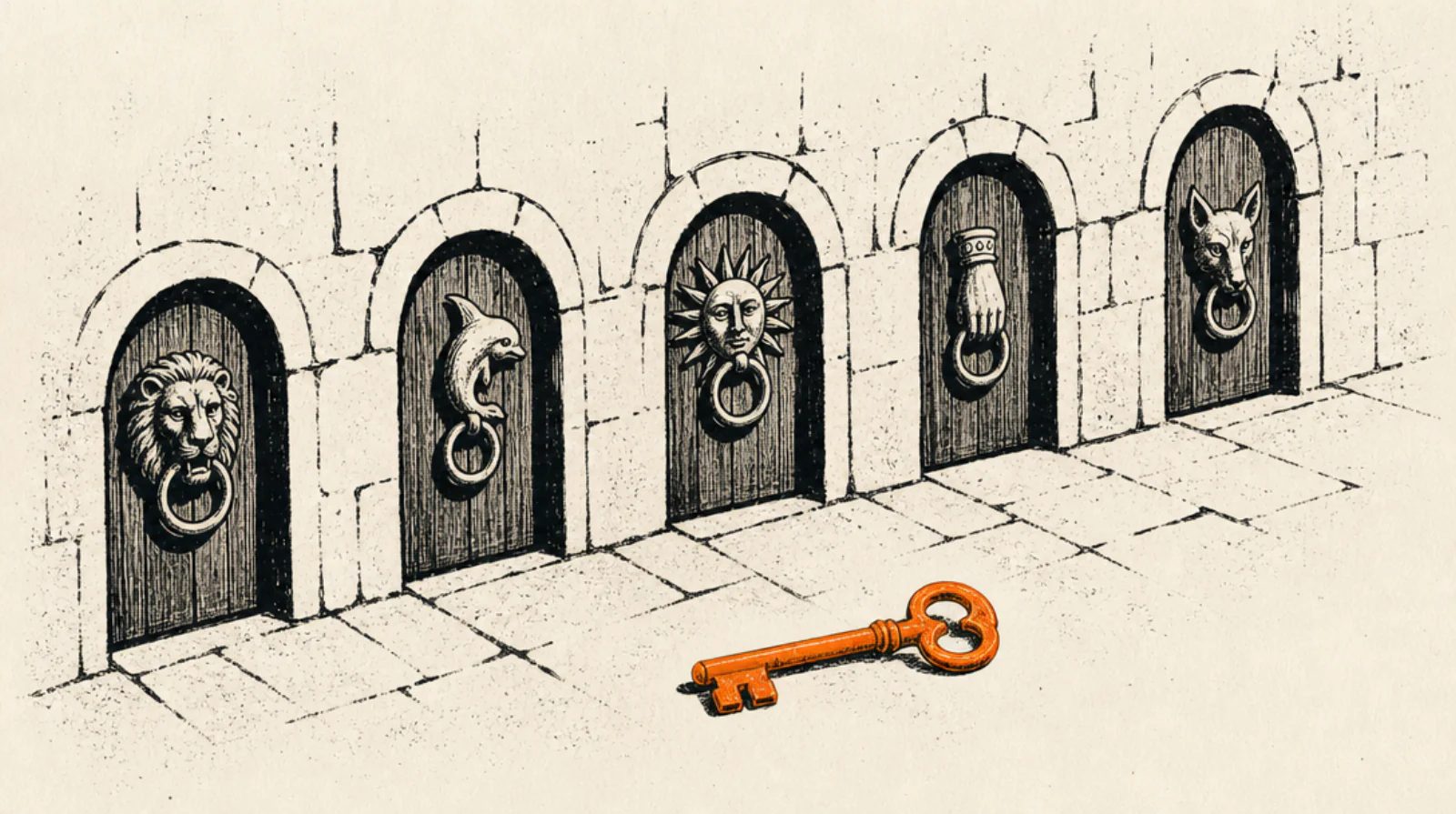
- Let the player see the reward behind each door before choosing. That turns the route into a build decision.
- Every death should move something forward: a story beat, a currency, a permanent upgrade. Its name, characters, mythology framing, art, music and voice work belong to its owner.
Hades-style games are action roguelites: you fight through a chain of rooms with fast, isometric or top-down combat, pick one reward after each cleared room (often by choosing which door to take, since each door shows its prize), stack those rewards into a build for this run, and when you die you return to a hub where you spend what you earned on permanent upgrades and the story moves forward. Building one means getting combat feel right, designing rewards that combine, and making failure feel like progress.
Hades, its characters, its take on mythology, its art style, its writing, its music and its voice work belong to its developer. The action roguelite structure is a genre many games share. Your game needs its own world, cast and reward theme; avoid simply reskinning gods and an underworld.
Why dying becomes the fun part
- Short, intense runs. Twenty to forty minutes, each one different because of the rewards you were offered.
- Builds emerge. Rewards that modify your attack, your dash or your special combine into something that feels personal.
- Failure pays. You always bring something home, so a bad run still advances the game. Players keep going instead of quitting in frustration.
- The hub is a story engine. Characters react to how you died and what you found, so narrative unfolds across dozens of runs.
Combat feel: values to start from
Before rooms, rewards or story, build one arena with one enemy type and tune until moving and hitting feel good. Starting values, measured in units where the hero is about 1 unit wide:
- Move speed: about 5 to 6 units per second, with almost instant acceleration. Slidey movement feels bad in this genre.
- Dash: 3 to 4 units in about 0.15 seconds, with invincibility for most of it. A short cooldown (around 0.3 seconds) or two charges.
- Attack chain: three hits, each 0.25 to 0.35 seconds, the third heavier. Any attack can be cancelled into a dash after its hit lands.
- Hit stop: freeze both attacker and target for 2 to 4 frames on hit, longer on heavy hits. This is what makes hits feel solid.
- Knockback and flash: small knockback on enemies, a white flash on the struck sprite, a short shake on big hits. See knockback and invincibility frames.
- Enemy telegraphs: every enemy attack has a wind-up of 0.4 to 0.8 seconds with a visible tell on the ground.
The dash guide covers input buffering and cancel windows in depth. On Startbase, ask the agent to expose these values as dials in the Engine panel so you can tune while playing.
Rooms, doors and routing
A run is a sequence of rooms grouped into biomes (three or four, each ending with a boss). After clearing a room, one to three exits open, each marked with the reward behind it: an upgrade from one of your patrons, currency, health, a rare item, or a shop. This small choice ("do I want healing or another upgrade?") is the routing layer of the genre.
- Room templates: hand-built arenas with spawn points and hazards, chosen at random from a pool per biome. Fifteen to twenty per biome feels varied for many runs.
- Waves: two or three waves per room, chosen from a budget that grows with depth (described in enemy waves and spawners).
- Pacing: a guaranteed shop and a rest room before each boss. Elite rooms (tougher enemies, better rewards) marked on their doors.
Rewards that build into a style
The reward system is the heart of the build. Organize upgrades into themed sets, each tied to a patron or source, and give each set a slot structure:
- 01Slot upgrades replace the behavior of a core action: your attack applies frost, your dash leaves a trail of fire. One per action, so picking one means not picking another.
- 02Passive upgrades add effects without a slot: bonus damage to slowed enemies, a shield after dashing.
- 03Combo upgrades appear only when you hold specific upgrades from two different sets. These are the moments players remember.
- 04Level-ups raise the numbers on an upgrade you already have.
Data shape: `{ id, set, slot, rarity, effect, values: [common, rare, epic], requires: [] }`. When offering a choice, pick three options from the chosen set, weighting toward slots the player has not filled yet. The upgrades and progression guide covers scaling curves.
The hub and meta progression
When the run ends, the player returns to a hub. Two currencies work well: one that drops often (spent on small permanent stat upgrades such as +5 max health or an extra dash charge) and one that is rare (spent on new weapons or story items). Cap permanent upgrades so skill remains the main driver; players should win through mastery, with upgrades making the climb gentler, not replacing it.
Write hub dialogue keyed by what happened in the last run: which boss killed you, which new upgrade you found, how far you got. Even a handful of conditional lines per character makes the hub feel alive. Store them as data keyed by condition so writing new ones never touches combat code.
Three twists that make it yours
- 01Rewards you can hear. Each patron is a musician, and each upgrade adds an instrument to the battle music. A full build literally sounds like a full band.
- 02A run that shapes the next one. The room you died in becomes a shortcut or a trap next time, so failures change the map.
- 03Two heroes, one controller. Swap between a fast duelist and a slow heavy at any time with a shared health bar, and upgrades apply to whichever hero is active.
A brief to paste into Startbase
A top-down 3D action roguelite for desktop with gamepad and keyboard, playable on phones with a virtual stick. Stylized low-poly look with bold colors. The hero is a young street drummer fighting through a city that has fallen silent, room by room, to bring music back. Combat: fast movement, a dash with brief invincibility (two charges), a three-hit drumstick combo that can cancel into the dash, a charged special, hit stop of 3 frames on every hit and a white flash on struck enemies. Every enemy attack has a visible ground telegraph. A run is 3 districts of about 12 rooms each, ending in a boss. After each room, doors show their reward: an upgrade from one of four band members (each with its own theme: brass adds knockback, strings add bleed, keys add shields, choir adds healing), coins, health or a shop. Upgrades either replace how an action works or add a passive; a few duo upgrades appear when holding upgrades from two members. Each upgrade also adds a layer to the battle music. Dying returns the hero to a rehearsal-room hub to spend notes on permanent upgrades, with band members commenting on the last run. Expose movement, dash and combat timings as dials.
Publish it with one click and share it to the Arcade. If you want a turn-based take on the same loop, the roguelike guide is the place to start.
Common mistakes
- Building rooms before combat feels good. Tune one fight first.
- Unreadable enemies. If players cannot see an attack coming, deaths feel cheap.
- Meta upgrades that replace skill. Keep them modest and capped.
- Rewards that only add numbers. The best upgrades change how an action behaves.
Frequently asked questions
What is the difference between a roguelike and a roguelite?
Both use runs that end on death with randomized content. A roguelite also keeps some progress between runs, like permanent upgrades or story, so each attempt moves the game forward.
How do I make combat feel impactful?
Use hit stop (a pause of a few frames on hit), a flash on the struck enemy, small knockback, screen shake on heavy hits, and attacks that can cancel into a dash.
Can I make my game about Greek gods like Hades?
Mythology itself is old and shared, but the characters, designs, writing and specific take of that game belong to its developer. A different world and theme will also make your game easier to tell apart.
Can a 3D action roguelite run in a browser?
Yes, at a modest scale. Startbase builds 3D games on Three.js that run in the browser, so players open them from a link; keep enemy counts and effects reasonable for phones.

