How to Design and Build a Skill Tree
A skill tree is a menu of promises. Here is how to size it, which nodes to put in it, how to store it as data and the bugs that show up when players start respeccing.
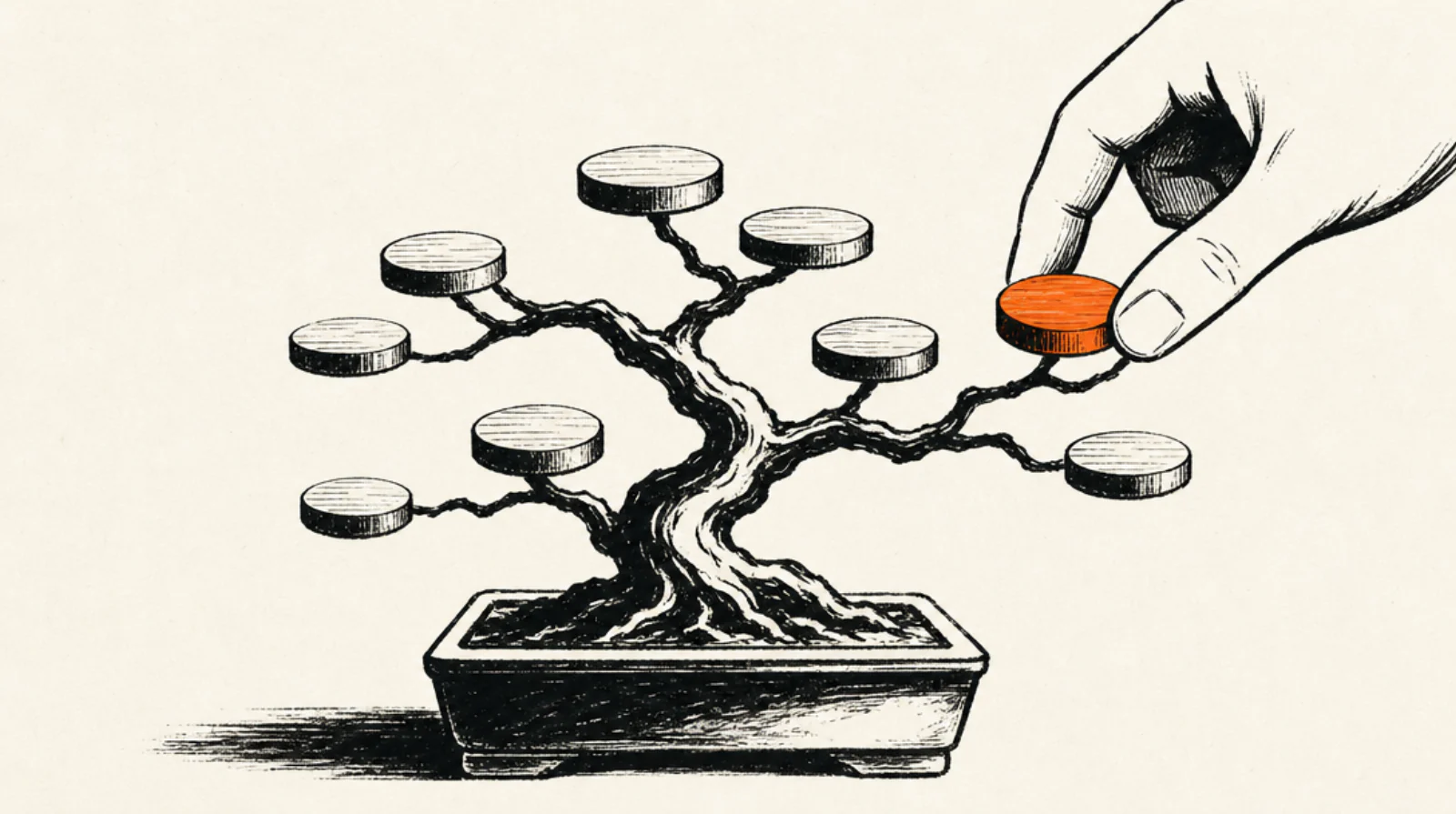
Key takeaways
- Give players fewer points than the tree has nodes. A tree you can fully complete is a checklist, not a choice.
- Mix three node types: small stat steps, build-defining keystones, and new actions. Keystones are where the arguments start.
- Store the tree as data (nodes, costs, prerequisites, effects) and compute stats from it, never by adding bonuses into the character as points are spent.
To make a skill tree, decide how many points a player earns over a full playthrough, build a graph of nodes that costs noticeably more than that, and connect the nodes so each branch leads toward one or two big build-defining choices. Store the graph as data, compute the player's stats from the nodes they own, and give players a way to undo choices. Those four decisions (budget, graph, data, respec) matter more than how pretty the tree looks.
What a skill tree is actually for
A skill tree turns progression into a decision. Leveling up already makes the character stronger; the tree's job is to make two players who reached the same level play differently. If every player ends up with the same nodes, the tree is decoration and a simple level-up stat bump would do the same work with less UI.
That gives you the first test for every node: would a reasonable player skip this one? If the answer is never, it belongs in the base character, not in the tree. If the answer is always, cut it or make it better. A good tree is full of nodes that some players love and others ignore.
Size the tree against the point budget
Start with arithmetic, not art. Count how many points a player will have at the end of the game. A common rule is one point per level, plus a few from bosses or hidden pickups. Then size the tree so the player can own roughly 40 to 60 percent of it by the end. Below that the tree feels stingy; above 80 percent every build converges.
- Short game (1 to 3 hours, level cap 10 to 15): 3 branches of 6 to 8 nodes, about 20 to 24 nodes, 12 points total.
- Medium game (5 to 10 hours, level cap 30): 3 to 4 branches of 10 nodes, about 35 nodes, 30 points total, with keystones costing 2 or 3.
- Roguelite meta tree (bought between runs): 25 to 40 nodes paid with a run currency, costs rising per tier (for example 10, 25, 60, 150), so the whole tree takes 15 to 25 runs.
Pace the first points fast. A player should spend a point within the first 5 to 10 minutes, then roughly every 10 to 15 minutes after that. Long gaps between points make the tree feel like a menu they forgot about.
Three kinds of node
- 01Steps: small numeric bonuses (+8% damage, +10 max health, -5% dash cooldown). Cheap, plentiful, and the connective tissue between bigger nodes. Keep each step between 5 and 15 percent of the stat it touches, so stacking four of them is meaningful but not absurd.
- 02Keystones: rule changers that define a build. 'Dashing leaves a trail of fire.' 'Healing potions also restore stamina.' 'Critical hits chain to one nearby enemy.' Put one at the end of each branch and one or two in the middle, and make them cost 2 to 3 points so taking one is a real commitment.
- 03Actions: new buttons or abilities (a ground slam, a second jump, a parry). These are the most exciting nodes and the most expensive to build, because each one needs animation, sound, UI and balance. Three to five in a small game is plenty.
Ordering matters: put a step or two before each keystone so players feel the branch's theme growing before the big payoff. A fire branch should make fire a little stronger twice, then change how fire works.
Shapes that work
- Parallel branches (warrior, ranger, mage): simplest to read on a phone screen and easiest to balance. Allow cross-branch picks, or every build is just a class choice.
- Web or constellation: nodes connect to neighbors in several directions, so a path between two branches creates hybrid builds. More expressive, harder to lay out and to test.
- Tiered rows: each row unlocks after spending N points anywhere in the tree (5 points opens tier 2, 10 opens tier 3). Good for keeping early power in check without long prerequisite chains.
The tree as data
Keep the whole tree in one data file. Each node needs an id, a name, a description, a cost, a list of prerequisite ids (and whether it needs all of them or any one), a position for drawing, and a list of effects. Effects should be structured, not text: `{ stat: "dashCooldown", op: "multiply", value: 0.9 }` or `{ unlock: "groundSlam" }`. The description shown to the player can be generated from the effects so the two never disagree.
The save file then stores only the set of owned node ids and unspent points. The character's final stats are computed every time from base stats plus every owned node's effects, applied in a fixed order: all additions first, then all multipliers. Computing instead of accumulating is the single most important rule here, because it makes respec, balance patches and save migration trivial. If you change a node's value from 10% to 8%, every save picks up the new number on the next load.
Respec, and the bugs that come with it
Let players undo. A full refund for a small in-game price (or free in the first hour) costs you nothing and makes players more willing to try keystones. Single-node refunds are harder: you can only remove a node if nothing the player owns depends on it. Check that by removing it, then walking the graph from the roots and confirming every remaining owned node is still reachable.
- Stat drift: bonuses added straight into the character when bought, then subtracted on refund, drift after a few respecs (especially with percentages). Computing stats from the owned set avoids it entirely.
- Orphaned actions: the player refunds the ground slam while it is equipped on a button. Unequip or swap it, don't leave a dead button.
- Current health over max: refunding +20 max health leaves the player at 120 of 100. Clamp current values after any recompute.
- Saves from older versions: a node id was renamed or removed in an update. Refund its cost on load instead of crashing or silently dropping points.
- Double spends: two fast taps on a node buy it twice or spend two points. Disable the node the moment the first tap lands and treat ownership as a set.
How a skill tree combines with other mechanics
Skill trees are a multiplier on whatever the game already has, so they work best when the nodes talk about existing verbs. A tree in a platformer can extend the dash (shorter cooldown, a second charge, damage on contact) or add a double jump as an action node. In an action game it can open new combo routes. In a roguelike, the permanent meta tree and the in-run upgrades should touch different things, or the meta tree quietly makes runs trivial.
Watch for one interaction above all: keystones that multiply each other. 'Crits chain' plus 'chains can crit' plus '+50% crit chance' is a build that deletes bosses. Some of that is the fun of a tree. Decide which combinations are allowed to break the game and test the strongest build you can find before you ship.
The tree screen on a phone
Skill trees are usually designed on a big monitor and played on a small one. Keep nodes at least 44 points across so a thumb can hit them, let the tree pan and pinch-zoom, and open a detail card on tap with a separate Learn button (never buy on first tap). Show three states clearly: owned, available now, and locked, plus a preview of what the stat line will become. The screen itself is game UI, so its layout can be arranged by hand in the UI Editor while the agent handles the rules.
A skill tree brief to paste
Add a skill tree to my 2D action game. The player earns 1 skill point per level (cap 15) plus 1 from each of the 3 bosses: 18 points total. Three branches (Blade, Shadow, Ember), 8 nodes each, 24 nodes, so a player can own about two thirds. Each branch: two small steps (+10% of one stat), a 2-point keystone in the middle, two more steps, a 3-point keystone at the end, and one new action (Blade: spin attack, Shadow: blink, Ember: fire trail). Prerequisites: each node needs the one before it in its branch; the middle keystones connect to the next branch so hybrids are possible. Store the tree in one data file with ids, costs, prerequisites and structured effects; compute stats from base plus owned nodes, additions before multipliers. Free full respec at the shrine. Tree screen: pan and zoom, tap a node for a card with Learn, owned/available/locked states and a stat preview. Save owned node ids and unspent points.
Before asking for that, use Plan mode if the game already has a stat system: the plan will show whether the tree reads stats from one place or whether bonuses are scattered through the code, which is the bug you want to catch before it exists. For where the points come from in the first place, the RPG guide covers XP curves and levels.
Frequently asked questions
How many nodes should a skill tree have?
Enough that a player can own about half of it by the end. Count the total points a player earns, then build a tree that costs roughly twice that. For a short game that is often 20 to 25 nodes.
Should players be able to reset their skill tree?
Yes, in most games. A cheap or free full respec makes players braver about trying big keystones. Only lock choices permanently when the choice itself is the point, such as picking a class at the start.
What is a keystone in a skill tree?
A keystone is a node that changes a rule instead of a number, such as making dashes leave fire or letting critical hits chain. Keystones define builds, so they usually cost more and sit at the end or middle of a branch.
How do I stop one build from being overpowered?
Compute stats from a single data file so you can see every bonus at once, then try the strongest combination of keystones yourself. Cap stacking percentages, add multipliers after additions, and accept that some broken builds are part of the fun if they take effort to reach.

