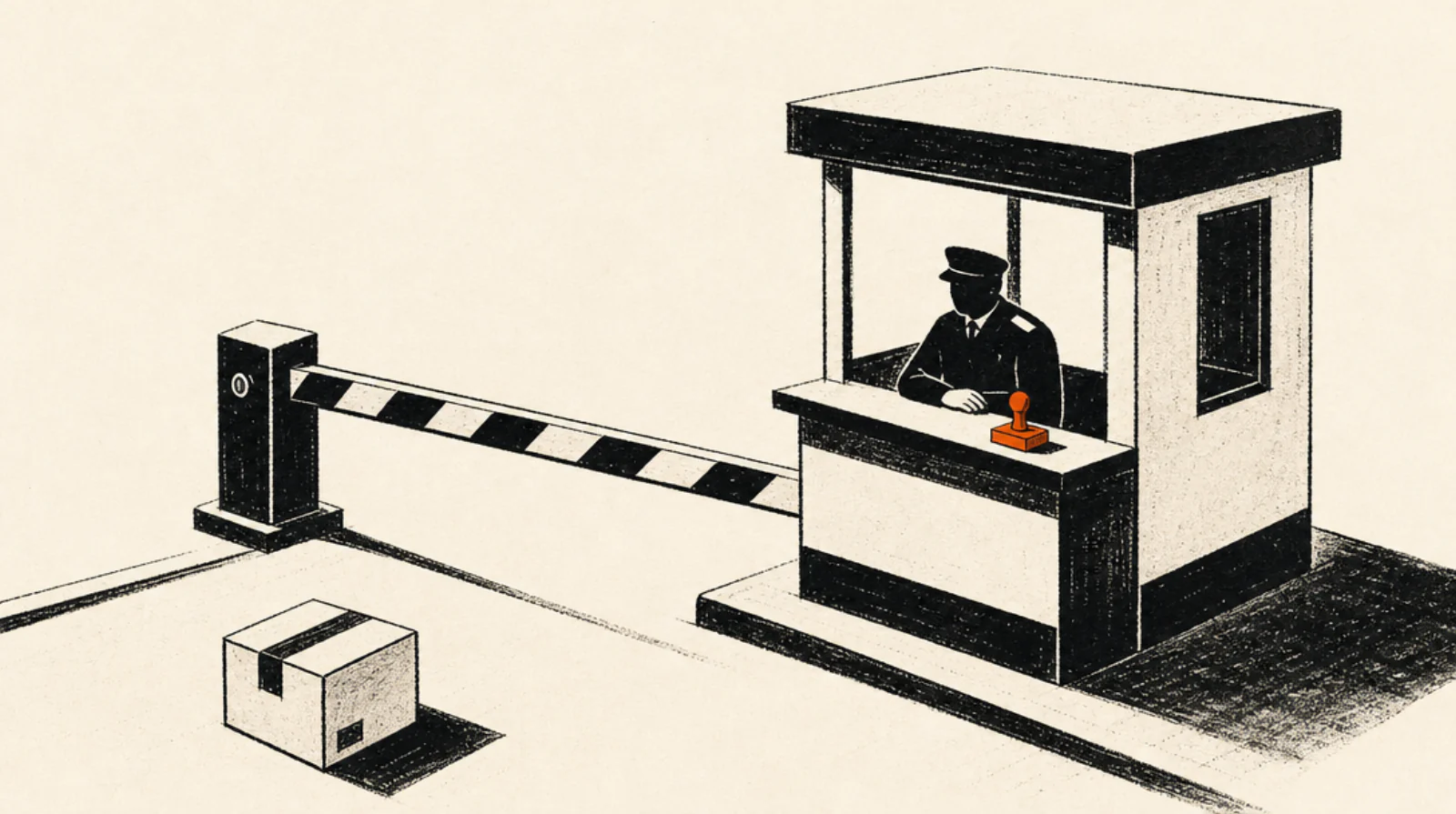
Objects falling through the floor
A fast object can skip right over a thin floor between two physics steps. Thicker colliders, capped speed and continuous collision stop it.

Key takeaways
- Tunneling is the top cause: a fast object moves farther in one step than the floor is thick, so no overlap is ever detected.
- The quickest fixes are thicker floor colliders, a capped fall speed, and continuous collision detection for fast bodies.
- Spawning inside geometry, missing colliders on level pieces, and setting positions directly cause the rest.
- Add a kill plane below the level so a fall never leaves the player stuck in empty space.
When objects fall through the floor or pass through walls in a game, the most likely cause is tunneling: a fast-moving object travels farther in one physics step than the floor is thick, so in one step it is above the floor and in the next it is already below, and the engine never sees them overlap. The other common causes are level pieces with no collider at all, objects spawned partly inside the floor, and code that sets positions directly instead of letting physics move them. Thicker colliders, a speed cap and continuous collision detection fix most cases.
Why fast things pass through thin floors
Physics engines check collisions at moments, not continuously. At 60 steps a second, an object falling at 30 units per second moves 0.5 units per step. If the floor is 0.1 units thick, the object can be 0.3 above it in one step and 0.2 below it in the next. No overlap, no collision. The rule of thumb: distance per step = speed / step rate, and anything moving farther per step than the thinner of the two shapes can tunnel.
That is why the bug often appears only after something speeds up: a long fall from a high platform, a dash, a cannon, a frame rate drop that makes a game using variable steps take one huge step. The collision detection glossary entry covers the broad and narrow checks behind it.
Causes, most likely first
1. Tunneling at high speed
Check: does it happen only when falling from high up, dashing or after a lag spike? Log the object's speed and compute speed divided by step rate; compare it with the floor's thickness. Fix, in order of effort:
- Thicken floor and wall colliders. The visual floor can stay thin; the collider can extend a unit or more below it. This costs nothing and fixes most cases.
- Cap speed. A terminal fall velocity (for example 20 to 25 units per second in a platformer with 1 unit tiles) is also better game feel.
- Turn on continuous collision detection (CCD) for fast, small bodies like the player, bullets and balls. Rapier and most engines support it per body; it sweeps the shape along its path. Do not enable it on everything, it costs time.
- Raycast for bullets. For very fast projectiles, cast a ray from last position to new position each step instead of relying on a tiny moving collider. The raycast glossary entry explains how.
- Clamp the frame delta so a lag spike cannot produce a giant step.
2. The floor has no collider, or the wrong one
The ground mesh or tile is visible but nothing in the physics world matches it. Common after adding new level pieces, importing a 3D model, or placing tiles in a layer that is drawn but not marked solid. Check: turn on the physics debug draw (most engines can outline colliders) and see whether the floor has an outline where you fall. Fix: add colliders to every walkable piece. For 3D models, prefer simple boxes or a merged static collider over a thin mesh collider from the visual mesh: one-sided mesh colliders let objects through from behind.
3. Spawning inside or under geometry
An object that starts partly inside the floor gets pushed out by the solver, sometimes downward. A respawn point placed exactly at floor height, a pickup dropped where a crate already sits, or a level loaded after the player spawns all cause it. Fix: spawn slightly above the surface (half the object's height plus a small margin), and spawn the player only after the level's colliders exist.
4. Code that teleports bodies
Setting position every frame (snapping to a moving platform, following the mouse, a "push out of wall" fix written by hand) can move a body straight past a wall between steps. Fix: move dynamic bodies with velocity; use kinematic bodies for platforms and parent riders to them through physics, not by copying positions.
5. Collision layers or groups that ignore each other
Many engines let you choose which groups collide. A new enemy type in a group that skips "ground", or a player put into a ghost layer during a dodge and never taken out, falls straight through. Check: print the body's collision groups at the moment it falls. Fix: list which groups should collide in one place and assign groups only there.
6. Custom collision code with gaps
In simple 2D games without a physics engine, movement is often checked once per frame with an overlap test. Moving both axes at once, or checking after moving, lets fast objects skip tiles and corners. Fix: move one axis at a time and resolve overlap after each, split large moves into sub-steps no longer than half a tile, and check the tiles along the path, not just the end point.
Always add a safety net
Even a well-built level has seams. A kill plane (a large trigger well below the lowest floor) that respawns the player at the last checkpoint turns a game-breaking fall into a small setback. Log where falls happen so you can find holes in level geometry. Seams are the usual spot: two floor pieces that almost meet leave a gap a small ball can slip into, and a row of separate tile colliders can snag or drop a sliding object at the joins. Overlap neighboring pieces slightly, or merge a run of tiles into one long collider. Checkpoints and respawning covers where to save the restart point.
In a Startbase game
Startbase 3D games use Three.js with Rapier physics ready to switch on, and 2D games run on PixiJS (games template). If you arrange levels yourself in the World Editor, a newly placed piece is a good first suspect for a missing collider. Use Draw on the preview to circle the exact spot where the player falls and send the screenshot with your message.
The message to send the agent
The player falls through the floor after long drops from the tower in level 2, and fast cannonballs pass through thin walls. Check every floor and wall piece has a collider, make floor colliders at least 1 unit thick below the visible surface, cap fall speed at 22 units per second, enable continuous collision detection on the player and cannonballs only, and clamp frame delta to 0.25 s. Spawn the player 0.2 units above the floor after the level loads. Add a kill plane 20 units below the lowest floor that respawns at the last checkpoint, and log the position of any fall.
Then test the exact case: jump from the highest point five times, fire ten shots at the thinnest wall, and play once at low frame rate (throttle the CPU in browser developer tools). If falls continue, ask the agent to turn on the collider debug view so you can both see what is missing.
Frequently asked questions
Why does my character fall through the floor only sometimes?
Usually tunneling: only fast falls or frames after a lag spike move far enough in one step to skip the floor. Thicker colliders, a fall speed cap and continuous collision detection fix it.
What is continuous collision detection?
A mode where the engine sweeps a moving shape along its path between steps instead of checking only the end positions, so fast objects cannot skip thin colliders. Use it on a few fast bodies, not all.
Why do objects pass through my 3D model's floor?
Mesh colliders made from visual geometry are often thin and one-sided. Use simple box colliders or a thick static collider under walkable areas instead.
How do I stop players falling forever when it happens?
Place a kill plane below the level that respawns the player at the last checkpoint, and log where falls happen so you can fix the holes.