What is churn?
Churn is how fast customers leave. One formula, two kinds (customer and revenue), and the data your app needs to store so you can measure it honestly.
Key takeaways
- Churn rate = customers lost during a period divided by customers at the start of it.
- Revenue churn can differ from customer churn: losing one big account hurts more than losing three small ones.
- To measure churn, store each subscription's start date, status and cancel date, not just whether someone is paying today.
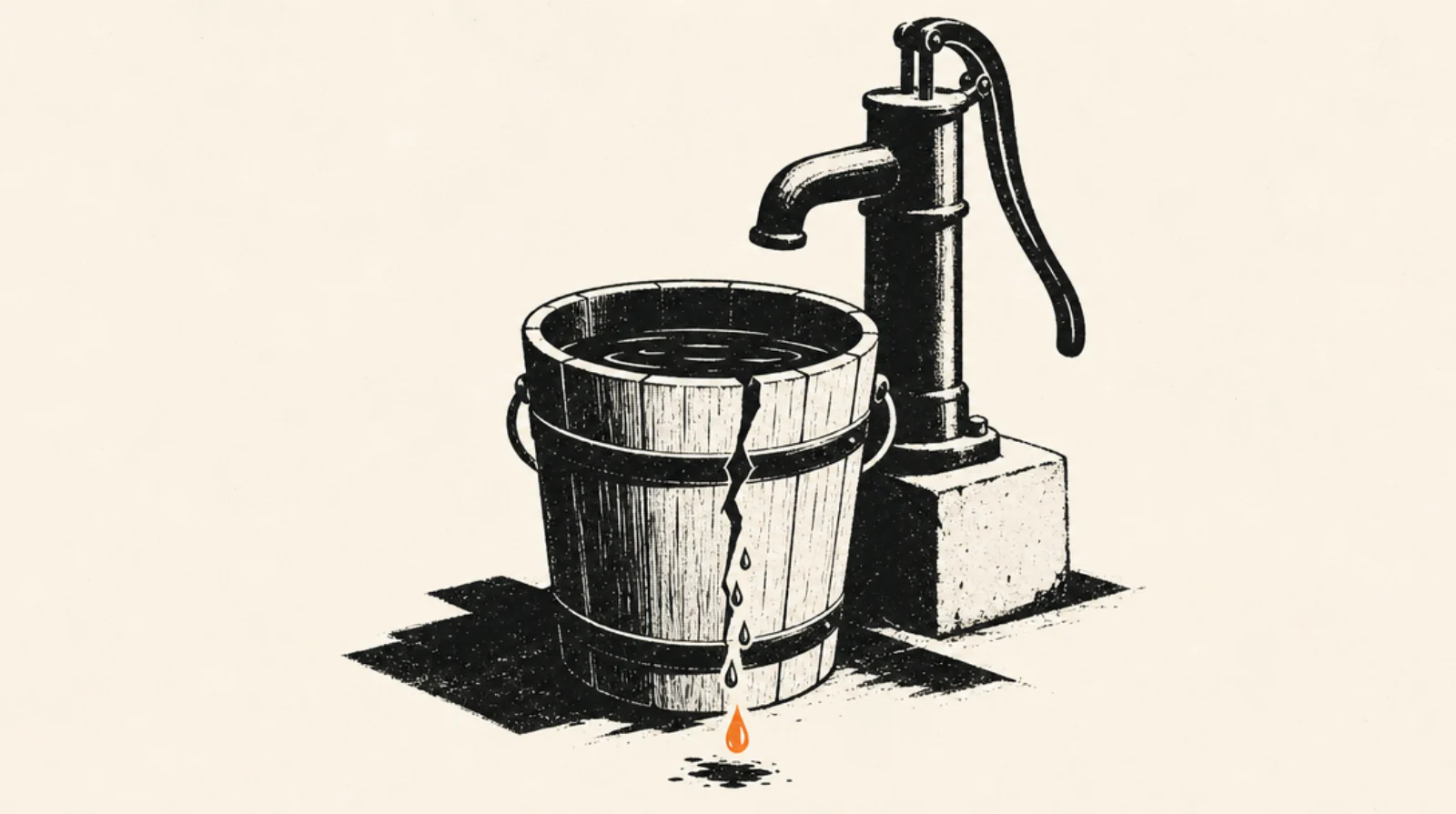
Churn is the rate at which customers stop using or paying for a product over a period, usually a month. It is the bucket's leak: every new customer you win pours water in, churn lets it out, and growth is only what stays.
An everyday example is a gym. It signs 50 new members in January, but 40 existing members cancel. On paper January was a great sales month; in reality the gym grew by 10.
The formula, with a worked example
Customer churn rate = customers lost during the period / customers at the start of the period. Customers who join during the month are left out of both numbers, so new sign-ups cannot hide cancellations.
Say you start March with 200 paying customers, gain 30 during the month and lose 12. March churn is 12 / 200 = 6%. You ended with 218 customers, but the 6% is what tells you about the product.
Revenue churn uses money instead of heads: MRR lost from cancellations and downgrades / MRR at the start of the period. If those 12 customers paid $10 each but one other customer downgraded from $200 to $50, revenue churn is ($120 + $150) / starting MRR. Many subscription businesses also track net revenue retention, which adds back upgrades from customers who stayed. See what MRR is for the building blocks.
Pick the period that matches how customers pay. Monthly plans call for monthly churn. If most customers pay yearly, a monthly number will look tiny for eleven months and then spike at renewal time, so track renewal rate per yearly cohort instead.
Measuring churn in an app you build with Startbase
Churn is only measurable if your database remembers history. A table that holds `is_paying: true` tells you nothing about last month. A subscriptions table with these columns does:
- `user_id`, `plan`, `price_cents`, `status` (trialing, active, past_due, canceled)
- `started_at`, `canceled_at`, `cancel_reason` (optional, from a one-question exit survey)
With payments on Stripe, the app learns about cancellations and failed renewals through webhooks, so ask for those to update the table. The payments guide explains the setup and Startbase Cloud runs the functions that receive them.
Add churn tracking to my subscription app. Keep a subscriptions table with user, plan, price, status, started_at, canceled_at and cancel_reason, updated from Stripe webhooks for cancellations, failed payments and plan changes. Add an admin-only page that shows, for each of the last six months: customers at start, customers lost, customer churn rate and revenue churn rate. When someone cancels, ask one optional question: why are you leaving?
Common confusions
- Churn vs retention. They are two sides of one number for a single period: 6% monthly churn means 94% retention for that month.
- Monthly vs annual churn. You cannot multiply monthly churn by 12. Losing 5% each month compounds to roughly 46% lost over a year, because each month's loss comes from a smaller base.
- Involuntary churn. Expired or declined cards cause cancellations nobody chose. Retrying payments and emailing before a card expires recovers part of it.
- Free users. For free apps, "churn" usually means users who stop being active; define "active" first (for example, opened the app in the last 28 days).
Ways to bring the number down, from onboarding to win-back emails, are in improving app retention.
Frequently asked questions
What is a good churn rate?
It depends heavily on price, audience and contract length, so compare against your own trend rather than a single benchmark. A rate that falls month over month is the goal.
Do trial users who never pay count as churn?
Usually not. Most teams measure trial conversion separately and count churn only from paying customers, so the two problems get separate fixes.

